Dental Office IT: What Ontario Practices Need to Get Right
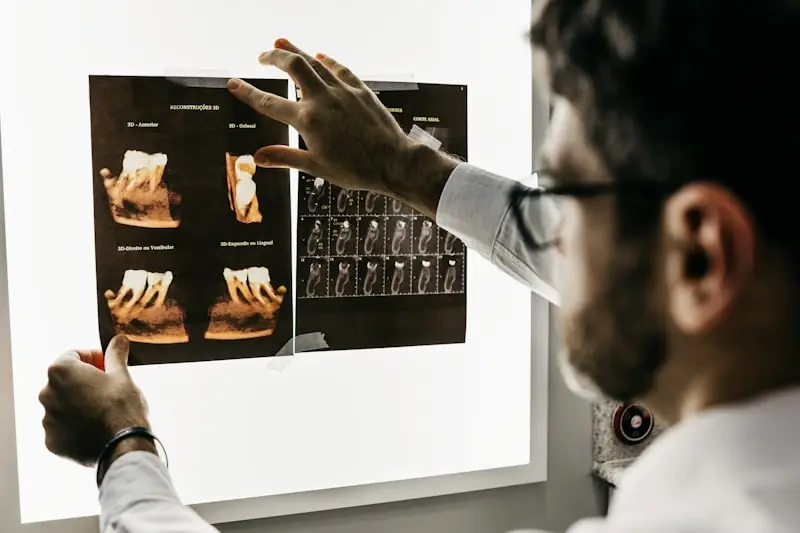
A dental practice runs on a short list of systems that all have to work at the same moment: the schedule at the front desk, the practice management database, the imaging software attached to the sensor in the operatory, and the billing that follows the appointment. When one of them stalls, the practice does not slow down — it stops, with a patient already in the chair and a waiting room that is already full. That is what makes dental IT different from generic small-business IT, and it is why the usual advice about antivirus and nightly backups does not go far enough. This guide covers what an Ontario dental office actually needs from its technology, where the common gaps sit, and how to tell whether a prospective provider understands the clinical side of the business or only the computers.
Dental IT Is Not Generic Small-Business IT
Most small offices can absorb an hour of downtime. A dental practice cannot, because its capacity is measured in booked chair time that does not come back. A busy clinic with a failed server is not inconvenienced — it is losing a day of production it will spend the next three weeks rescheduling around patients who are not always willing to come back. The second difference is regulatory: a dental office holds personal health information, which places it squarely under Ontario's Personal Health Information Protection Act. The third is architectural. Dental software is unusually demanding, with a practice management database that expects low-latency access, imaging files measured in hundreds of megabytes, and hardware drivers tied to specific sensors and scanners. Generic IT support that has never worked with this stack tends to discover all three problems on the same bad morning.
Uptime at the Chair Is the Real Requirement
The question worth asking a provider is not what their average response time is. It is what happens in the first ten minutes when one operatory workstation will not load imaging and the patient is already frozen. That answer tells you whether support is a person or a ticket queue. It is also why a practice should care about coverage before the first appointment and after the last one — a problem discovered at 7:40 a.m. is not an after-hours issue to a clinic, it is the entire morning. IT Rapid Support runs a genuinely 24/7 helpdesk with on-site dispatch across the GTA for exactly this reason.
Redundancy in a dental office is cheaper than most practices assume, and it is worth planning deliberately rather than discovering the gaps during an outage. A spare imaging-capable workstation that is already configured and tested. A second internet path so a cable cut does not take the cloud practice management platform with it. Battery backup on the server and the network switch, sized and tested rather than bought once and forgotten. None of that is exotic. All of it is the difference between a bad hour and a lost day.
Practice Management and Imaging Software: Decide Who Owns What
Dental practices typically run a practice management platform — ABELDent, Dentrix, Tracker, Open Dental, Curve and Cloud9 are all common in Canadian offices — alongside imaging software supplied by the sensor, pano or CBCT vendor. Each of those vendors supports its own application, and each of them will happily tell you the problem is somewhere else. Nobody supports the space in between: the server the database sits on, the network the operatory workstations use to reach it, the Windows update that occasionally breaks an imaging driver, and the backup that has to capture the database in a consistent state rather than mid-write.
That gap is where most dental IT problems actually live, so make ownership explicit before you sign anything. Write down which of the following belongs to the software vendor and which belongs to IT: database performance and maintenance, imaging drivers on each operatory workstation, operating system patching, backup and verified restore, remote access for the vendor's own support team, and after-hours escalation when a release breaks something. A provider that will get on a call with your practice management vendor instead of handing you a phone number is worth considerably more than one that will not.
Backups That Actually Restore an Imaging Database
Most dental practices have a backup. Rather fewer have a restore. The distinction matters more here than in almost any other small business, because of how the data is stored. A practice management database is a live file, and a plain file-level copy will cheerfully grab it mid-write — producing a backup that reports success every single night and fails on the one day it is needed. Imaging then adds volume, as years of radiographs and CBCT studies quietly outgrow whatever the backup job was originally sized for, often without anyone noticing until the retention window has silently collapsed to a few days.
What good looks like is specific: a backup that is monitored rather than merely scheduled, so a failure raises an alert instead of an entry in a log nobody reads; an offsite copy that cannot be reached with the same credentials as the live systems; and a test restore that a named person has actually performed and documented. We set out the full standard in our cloud backup and disaster recovery guide. The short version for a practice manager: if nobody can tell you the date of the last successful test restore, the practice does not have a verified backup, whatever the monthly invoice says.
PHIPA: What an Ontario Dental Practice Is Obligated to Do
Dentists in Ontario are health information custodians under the Personal Health Information Protection Act. The duty sits with the practice — not with the IT provider and not with the software vendor. PHIPA requires custodians to take steps that are reasonable in the circumstances to protect personal health information against theft, loss, and unauthorised use or disclosure, and to keep a record of who has accessed what. It also requires that where information is stolen, lost, or used or disclosed without authority, the affected individual is notified at the first reasonable opportunity, with certain breaches reported to the Information and Privacy Commissioner of Ontario.
Two practical consequences follow from that. The first is that shared logins are a genuine liability rather than a convenience, because an audit trail that simply says front desk cannot tell a regulator, or you, who opened a particular chart. The second is that you need to know where the data physically resides — including for any cloud practice management platform — before anyone asks. It is worth being blunt about the limits here: no IT provider can make a practice PHIPA compliant, because compliance spans staff training, consent handling, retention and record keeping that no vendor controls. What a provider can do is implement the technical safeguards the Act expects, which is how we describe our own work — controls that help a practice work toward its obligations, not a certificate that discharges them. Our privacy compliance checklist for Ontario businesses covers that technical layer in more detail.
Email Is Where Most of the Risk Actually Enters
Referral letters, lab communications, insurance predeterminations and supplier invoices all arrive by email, which makes the practice inbox both the busiest workflow in the office and the most attractive target in it. The controls that matter are specific and unglamorous: multi-factor authentication on every mailbox, SPF, DKIM and DMARC published on the practice domain and set to enforcement, and a front-desk team that recognises a payment-redirection attempt for what it is.
Enforcement is where most organisations stop short. When IT Rapid Support measured the public DNS records of 481 mail-enabled GTA business domains, 52.4% published a DMARC record but only 20.6% had it set to actually reject or quarantine spoofed mail. Four out of five had the paperwork and none of the protection. If you are not certain which side of that line your practice sits on, start with what SPF, DKIM and DMARC actually do, and treat multi-factor authentication as the single highest-value control you can turn on this week.
Ransomware and the Practice That Grew by Acquisition
Multi-location practices are the most exposed, and the reason is structural rather than careless. Each location tends to arrive with its own server, its own local administrator password, its own remote access arrangement and its own idea of what a backup is — and then they are joined into one network so head office can report across all of them. The result is a single flat environment where the weakest of the acquired sites sets the security level for every other one.
What limits the damage is layered and, again, boring: endpoint protection on every machine including the operatory workstations that nobody wants to touch, managed detection and response so that mass file encryption at 2 a.m. on a Saturday is investigated rather than merely logged, an offsite backup copy that the ransomware cannot authenticate to, and a written plan naming who gets called first. Our ransomware protection guide for Ontario businesses sets out that sequence in order.
The Operatory Workstations Are Usually the Weak Point
Operatory PCs are the machines least likely to be replaced on schedule. They are attached to a sensor that currently works, they run a driver nobody wants to disturb, and they are never idle long enough to patch without disrupting a clinic day. That combination reliably makes them the oldest and least protected devices in the practice, sitting on the same network as the patient database. With Windows 10 now past end of support, any operatory machine still running it is accumulating unpatched vulnerabilities every month with no fix coming.
The remedy is unglamorous project work: inventory every workstation and server in the practice, confirm with each imaging vendor which of your hardware is supported on Windows 11, and schedule replacements around the clinic calendar rather than in a panic after something fails. Doing it deliberately costs a fraction of doing it reactively, and it is the kind of work a managed provider should be raising with you before you have to ask.
Staff Turnover, Shared Logins and Access Control
Dental offices have real staff movement — hygienists, associates, temporary coverage and students all need access, sometimes for a single day. The two habits that cause the most trouble are shared front-desk logins and accounts that are never disabled when someone leaves. Both break the audit trail PHIPA expects, and the second one leaves a working credential in the hands of someone who no longer works for the practice.
The fix is procedural more than technical: a named account for every person, role-based access so front-desk staff cannot open clinical records they have no reason to see, multi-factor authentication on email and any remote access, and an offboarding step that disables the account the same day rather than the same quarter. Put the offboarding step in the same checklist as collecting the keys and it stops being forgotten.
What to Ask Before You Sign
Ask every candidate the same seven questions and compare the answers side by side. 1. Have you supported our practice management and imaging software before, and will you deal with those vendors directly on our behalf? 2. Is support genuinely 24/7, and does a person respond before the first appointment of the day? 3. How are backups monitored, and when was the last documented test restore you performed for a practice like ours? 4. Will you get our domain to DMARC enforcement, and how long will that take? 5. What exactly is included in the monthly fee rather than billed as a project — specifically MFA, patching, endpoint protection and backup monitoring? 6. What happens in the first hour of a suspected breach, and what will you document for our insurer and, if required, the Information and Privacy Commissioner? 7. Can you provide on-site help at each of our locations, and how quickly? Clear answers are a good sign. Vagueness on any one of them is also an answer.
How Dental IT Is Usually Priced
Managed IT for a dental practice is normally a fixed monthly fee, scaled by the number of people who need support and the number of devices and servers under management. We do not publish a rate card, because a number quoted before anyone has seen your server, your imaging volume and your operatory count is a guess dressed up as a price. What we will happily explain is how the figure is built: how many staff need support, how many workstations and servers are managed, whether the practice management platform is on-premises or cloud, how many locations need on-site coverage, and which security controls sit in the base tier rather than being sold on top of it. That last item is where quotes most often stop being comparable, so our managed IT plans enumerate line by line what belongs to each tier.
Where IT Rapid Support Fits
IT Rapid Support provides managed IT services for dental practices across Toronto, Vaughan and the wider GTA, from our head office at 7810 Keele Street in Vaughan. For a dental office that means a 24/7 helpdesk your front desk can actually reach, monitoring and patching across operatory and administrative workstations, Microsoft 365 and Azure administration, multi-factor authentication, endpoint protection and managed detection and response, SPF, DKIM and DMARC configured properly on your domain, monitored backups, and on-site dispatch when a problem needs hands on a machine — all on a fixed monthly fee, so an incident does not arrive with a separate invoice attached.
If you would like a plain-language read on where your practice stands today, start with the free IT risk calculator or call (289) 582-9930. If it turns out your fundamentals are already in reasonable shape, we will tell you that too.
Share this resource

IT Rapid Support Team
Managed IT & Cybersecurity, GTA
IT Rapid Support Team is a security expert with extensive experience in creating security guidelines.
More from this authorRelated Resources

IT Helpdesk Mississauga: What 24/7 Support Should Include
How Mississauga businesses should evaluate an IT helpdesk: 24/7 coverage, escalation, on-site dispatch, security ownership, backups, and fixed monthly pricing.
Read more
Windows Server 2016 End of Support: What Ontario Businesses Need to Decide Before January 2027
Windows Server 2016 support ends January 13, 2027. What stops, why the date is not January 12, and how Ontario businesses should pick an upgrade path.
Read more
IT Support in Halton Region: What Businesses in Milton, Oakville, Burlington and Georgetown Should Expect
What managed IT support looks like across Halton Region — coverage from Milton to Burlington, on-site response, and what to check before hiring a provider.
Read moreNeed Expert Security Advice?
Our team of cybersecurity experts is ready to help you secure your organization. Schedule a free consultation today.
Get in Touch