

Cyber incident response: stop the attack, keep the evidence, get back to work.
Incident response services for businesses in Toronto and the GTA, their counsel and their insurers. We contain the attack, preserve the evidence and explain in writing what happened. Active incident: call (289) 582-9930, 24/7. For anything else, send us a message; we are staffed 24/7.
If your email may be compromised, use a personal account or call.
$2M cyber liability insurance · Since 2018 · We work under counsel’s direction when counsel is retained
Reviewed by the ITRS security team · Last updated
Not sure what to do first? Use our first-hour triage checklist.
Signs it is time to bring us in.
- A mailbox is sending messages nobody wrote
- You paid a supplier’s invoice, and they say the money never arrived
- Files are encrypted or a ransom note has appeared
- Sign-ins from countries where you have no staff
- Your insurer or broker has asked for an independent investigation
- A client or vendor says they received a fake invoice from your domain
Triage and containment
Sessions revoked, credentials reset, malicious rules and forwarding removed, affected hosts isolated, without destroying the evidence you will need.
Scoping
We establish which accounts, devices and data were touched, and just as importantly which were not.
Eradication and recovery
Root cause closed, systems restored from known-good backups, controls hardened before staff return to normal work.
Communication
Plain-language briefings for leadership, coordination with your counsel, insurer and broker, and support for notification decisions.
What to do before we are on the case.
Our response follows the incident handling guidance in NIST SP 800-61 Rev. 3.
Write down the time, who noticed, what they saw and which machines or accounts look affected. Photograph screens.
Unplug affected computers from the network and leave them on. Memory can hold evidence.
Coordinate by phone, not company email, if Microsoft 365 or Google Workspace may be compromised.
Do not wipe machines, restore backups or reset every password until the entry point is known.
Tell your broker or insurer early and check the policy’s vendor rules before signing with any responder.
Working with your insurer and breach counsel
When counsel is retained we work under counsel’s direction, and our reports are written so an adjuster can follow the timeline and the costs. See our page for counsel, insurers and brokers.
Cyber incident response in Toronto and the GTA, step by step.
Is this an incident?
The Canadian Centre for Cyber Security defines a cyber incident as any unauthorized attempt, successful or not, to get into, change, delete, block access to or shut down a system, network or account. That covers more than ransomware.
The calls we get most often start with a ransom note on a screen, a supplier saying your invoice now has new bank details, a mailbox sending messages nobody wrote, or a security alert that comes back after it was cleared. If any of those is happening, treat it as an incident until someone has checked.
What we ask when you call
The first call is triage. We want to know what you saw and when, what systems you run (Microsoft 365 or Google Workspace, on-premise servers, who manages them), what has already been changed, whether backups exist and when they last ran, and if you have cyber insurance or a lawyer involved.
By the end of the call you should have a short list of what to do, what to leave alone and who else needs to be told. The incident response FAQ has the longer answers to the questions people ask in those first hours.
How a response runs
We follow the shape set out in NIST SP 800-61 Rev. 3, which treats response as part of ongoing risk management rather than a single clean-up. For ransomware we also work from the Cyber Centre's ransomware playbook (ITSM.00.099).
Contain
Cut the attacker's access in a planned order: sessions, sign-in methods, mailbox rules, app consents and remote access tools, not just passwords.
Preserve
Image key machines and export logs before they roll over. Microsoft 365 and Google Workspace logs have limited retention, so this happens early.
Investigate
Work out the entry point, what the attacker did and what they could see or take, and record what cannot be determined.
Recover
Restore from backups that have been checked, once the entry point is closed, so you are not restoring the same weakness.
Report
Write up the timeline, findings and fixes in a form your counsel, insurer and board can use.
An example from our own files
A pharmaceutical services client had a mailbox taken over. Working from primary evidence, we rebuilt the attack minute by minute, including 2,706 emails sent from the account in under forty minutes. Years later the same client asked us to design centralized identity and device management across four countries. The full case study sets out what we found.
Lawyers, insurers and notification
When breach counsel is retained, we work under counsel's direction. Whether that protects the analysis under privilege depends on the facts, so that is your lawyer's call. For counsel, insurers and brokers explains how we work with each.
Under PIPEDA, a breach of security safeguards that creates a real risk of significant harm must be reported to the Office of the Privacy Commissioner of Canada and to affected individuals as soon as feasible. Quebec, Alberta and Ontario's health sector have their own rules; the privacy breach FAQ covers them.
What you have at the end
- A timeline of the incident from first sign of access to containment
- The entry point and the evidence for it
- What the attacker accessed or took, and what could not be established
- The containment and recovery steps taken, with dates
- Recommended fixes, ranked by how much they reduce the chance of a repeat
Specific situations
Each of these has its own page with the steps that differ: ransomware response, business email compromise, Microsoft 365 and Exchange forensics and the first 72 hours of an incident. Our full service description is on incident response.
The 24/7 incident line is (289) 582-9930.
What you receive.
- 01Incident timeline (UTC, source-referenced)
- 02Investigation report with root cause
- 03Affected-party analysis for notification decisions
- 04Remediation plan and closure letter
Fictional matter. Preview of the first 3 of 11 pages.
Before you call.
- Our insurer has a vendor panel. Can we still call you?
- Yes, but check first. Call your broker or insurer early and read the policy’s vendor rules before signing with any responder, because some policies only cover panel firms or need the insurer’s approval. When counsel is retained, we work under counsel’s direction and report to them. Forensics for breach counsel and insurers.
- Should we reset every password first?
- No. Not every password, and not before the entry point is known. Resetting too early can tip off the attacker, who may still hold a session or a mailbox rule, and it can overwrite sign-in evidence. Call first and we will agree what to reset, in what order, and what to record before you do.
- How much does cyber incident response cost?
- There is no list price; incident response is quoted from scope: how many accounts, devices and cloud tenants are affected, whether data theft must be ruled out, and whether counsel or an insurer needs a forensic report. Insured? Call the insurer first. Statistics Canada found about one in six Canadian businesses was hit by a cyber incident in 2025.
- Do you only take emergencies?
- No. The line is answered 24/7 for active incidents such as ransomware, a hacked mailbox or a suspected breach, and for everything else. Post-incident reviews, readiness work, incident response plans and tabletop exercises are booked by phone or through the contact form.
Related services.
Digital Forensics
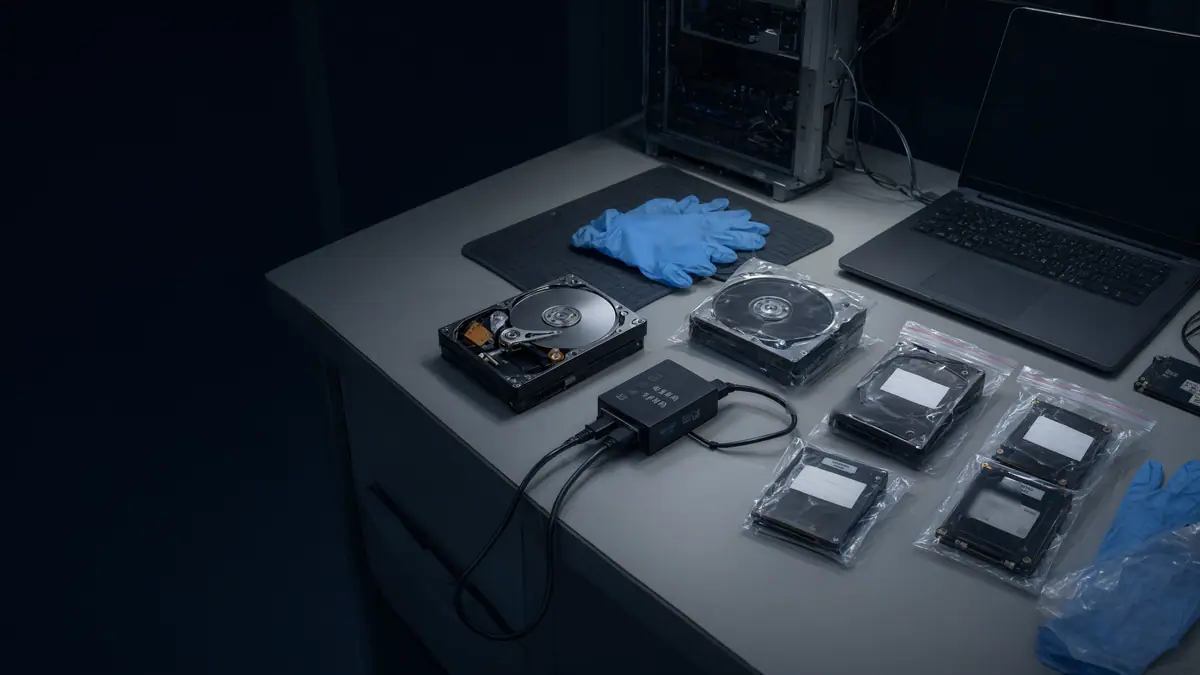
Forensic acquisition and analysis of laptops, phones, mailboxes and cloud tenants, with chain of custody.
Penetration Testing
External, internal, web application and Microsoft 365 testing, every finding verified by hand, with a retest letter when fixes are in.

Attestation & Assessments
Independent security assessments, Microsoft 365 audits and attestation letters for clients, insurers and auditors.
Related work.
- Case studyFrom Breach Forensics to a Company-Wide Identity PlanFrom reconstructing a 2018 mailbox compromise minute by minute to scoping centralized Entra ID and Intune management for a 40 to 50 person pharma firm.
- Case studyCleaning Up a Microsoft 365 Tenant for a Fire Protection & Security CompanyHow IT Rapid Support audited every Microsoft 365 group for a GTA fire protection company, fixed mail routing, and cut an 82,456-item mailbox by 62%.
Under attack right now?
Call before you reset passwords, wipe a laptop or pay anyone. A responder will help you contain the incident without destroying the evidence you will need later.