
Writing an incident response plan that works for a small organization
A usable incident response plan is short enough to read under stress and specific enough to act on. Here is how to build one around roles, decisions, contacts and a few scenario playbooks, instead of a 60-page binder nobody opens.
Reviewed by the ITRS security team · Last updated
What the plan must answer
The Canadian Centre for Cyber Security puts 'develop an incident response plan' first in its baseline cyber security controls for small and medium organizations. NIST SP 800-61 Rev. 3, published in April 2025, goes further and treats incident response as part of everyday cyber risk management, aligned to the functions of the NIST Cybersecurity Framework 2.0, rather than a separate emergency binder. Both point to the same thing: the plan exists so people do not have to invent the process in the middle of an attack.
A good small-organization plan fits on a handful of pages and answers six questions:
- Who is in charge, and who can they call at 2 a.m.?
- Who can authorize spending, shut systems down, and speak to clients or media?
- How will we communicate if email and Teams are down or compromised?
- What do we do first for the incidents we are most likely to face?
- How do we preserve evidence and decide whether we must notify anyone?
- How do we know the plan still works?
Roles and decision rights
Roles matter more than names, because people go on holiday. Assign a primary and a backup for each, and write down what each role can decide without asking.
| Role | Typical person | Decides |
|---|---|---|
Incident lead | Operations manager or IT lead | Activating the plan, calling in outside help, containment steps |
Executive sponsor | Owner, CEO or managing partner | Spending, shutting down business operations, ransom-related decisions with counsel |
Technical lead | IT provider or internal IT | Isolation, account lockouts, restores (after evidence is preserved) |
Privacy / legal lead | Privacy officer, with outside counsel | Breach assessment, notifications, privilege structure |
Communications lead | Client relations or marketing | Staff, client and media messages, approved by the sponsor |
Contact sheet and out-of-band communication
The plan's contact list must work when your systems do not. Store it on paper and on personal phones, and include your insurer's claims line and policy number, counsel, your bank's fraud department, your IT provider's after-hours number, and an incident responder. Agree an alternate channel in advance, such as a group call number or a messaging group set up on personal devices, so you are not coordinating through a mailbox the attacker can read. Our printable incident contact sheet and call-tree guide cover this in detail.
Scenario playbooks to attach
Do not try to cover every possible attack. Attach one-page playbooks for the three or four scenarios most likely for your organization. For most Canadian small businesses that means:
- Business email compromise and payment fraud
- Ransomware or widespread encryption
- Lost or stolen laptop or phone
- Data sent to the wrong person, or a vendor reporting a breach that involves your data
Evidence and notification steps
Start a timeline
Who noticed what, when. Photograph screens. Record every action taken.
Preserve before you clean
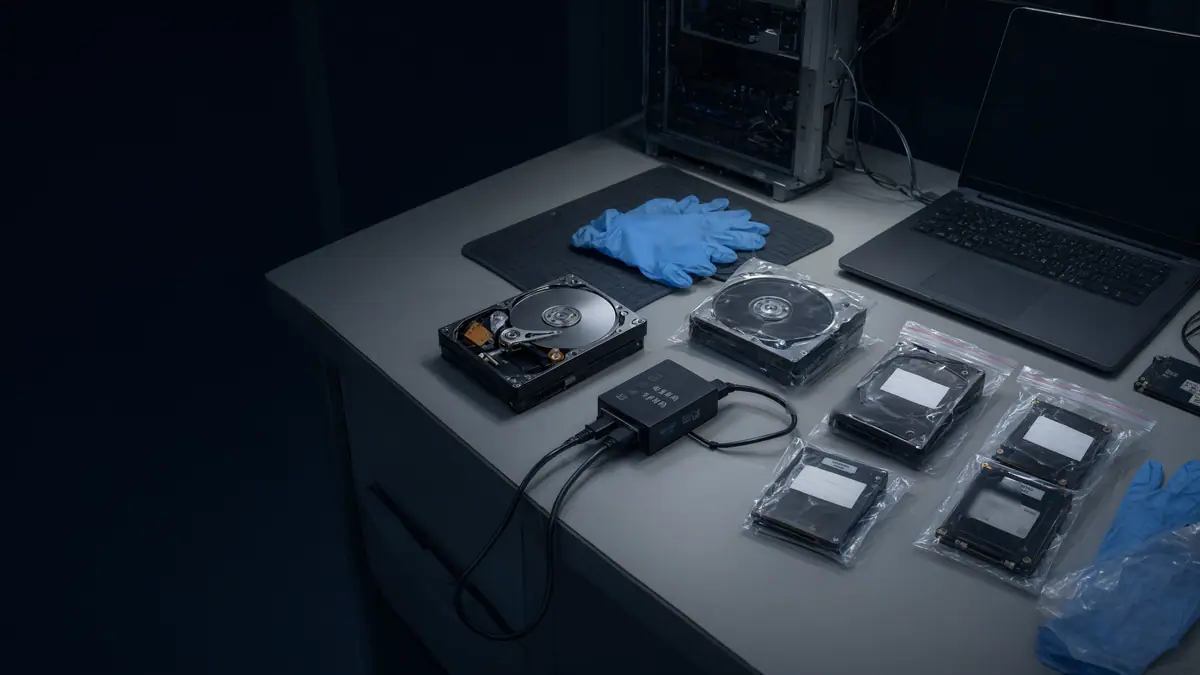
Isolate devices rather than powering them off; do not wipe or reimage until key systems are imaged; export or hold cloud logs before they age out.
Call the insurer early
Many policies require prompt notice and approval of vendors.
Assess notification with counsel
Under PIPEDA, a breach creating a real risk of significant harm must be reported to the Privacy Commissioner and affected individuals notified as soon as feasible. Quebec, Alberta and Ontario health custodians have their own rules.
Keep the breach record
PIPEDA requires a record of every breach of security safeguards to be kept for 24 months, reported or not.
Common questions about IR plans
It is a good start, especially for the insurer's own notice requirements. Templates rarely know who in your organization can approve spending at night, which systems matter most, or how you will talk if email is down. Fill those gaps in and test it.
Short enough that someone will actually read it during an incident. For most small organizations, a few pages of core plan plus one page per scenario playbook is right. Detail can live in appendices.
One named person, usually the incident lead or whoever manages IT risk, with the executive sponsor signing off. Ownership means keeping contacts current and scheduling the annual exercise.
Testing and updating
An untested plan is a guess. Run a tabletop exercise at least once a year: walk the team through a realistic scenario, such as a finance mailbox hijacked on a Friday afternoon, and note every point where someone did not know what to do or who to call. Update the plan after every exercise, every real incident, and every change of IT provider, insurer, bank or key staff. ISO/IEC 27035, the international standard on incident management, builds the same cycle of planning, response and lessons learned into its approach.
If you want help, we run tabletop exercises and review plans against your actual systems and contracts.
Related reading.
- ToolIncident contact sheet (printable)A fill-in sheet of everyone you will need to reach during a cyber incident, from your own decision-makers to your insurer, bank and regulators.
- GuideOut-of-band communications and incident call treeWhen an attacker is inside your email or Teams, using them to coordinate the response tells the attacker your plans.
- ServiceIncident response tabletop exercisesA facilitated, discussion-based rehearsal of a realistic incident, so leadership and IT find the gaps in your plan in a meeting room rather than during a real attack.
- ArticleWhat to Do in an IT Emergency: A First-Hour Checklist for GTA BusinessesHow to tell an IT emergency from an urgent ticket, first-15-minute checklists for network outages, server failures, email down, ransomware and payment fraud, what to…
- PracticeCyber Forensics & AssuranceIncident response, digital forensics, penetration testing and independent attestation.

Under attack right now?
Call before you reset passwords, wipe a laptop or pay anyone. A responder will help you contain the incident without destroying the evidence you will need later.